


South Australia
Flinders Ranges Photography Safari
Tour Collection: Photography


7 Days
7 People
Easy to Moderate
Fly straight into the largest lowland rainforest in Australia and spend your first days among palm cockatoos, eclectus parrots and birds-of-paradise, then drive home down Cape York over the Great Dividing Range to the savannah, where the endangered golden-shouldered parrot nests in termite mounds, with never more than seven guests and a window seat for each.
This tour starts where most Cape York trips finish. You fly from Cairns (Gimuy) to Lockhart River, about an hour and a half over the peninsula, and are birding in Kutini-Payamu (Iron Range) National Park the same day, with four nights at The Greenhoose, a lodge set in its own private rainforest on the edge of the park. The group then drives south in 4WD Toyota Commuter vehicles, a maximum of seven guests so everyone has a window seat, over the Great Dividing Range at Tozer's Gap to Musgrave Roadhouse for two nights among the woodlands and wetlands of Rinyirru (Lakefield) National Park and Artemis Station. The final day follows the Peninsula Developmental Road back to Cairns, a road that is only passable by 4WD in the dry season.
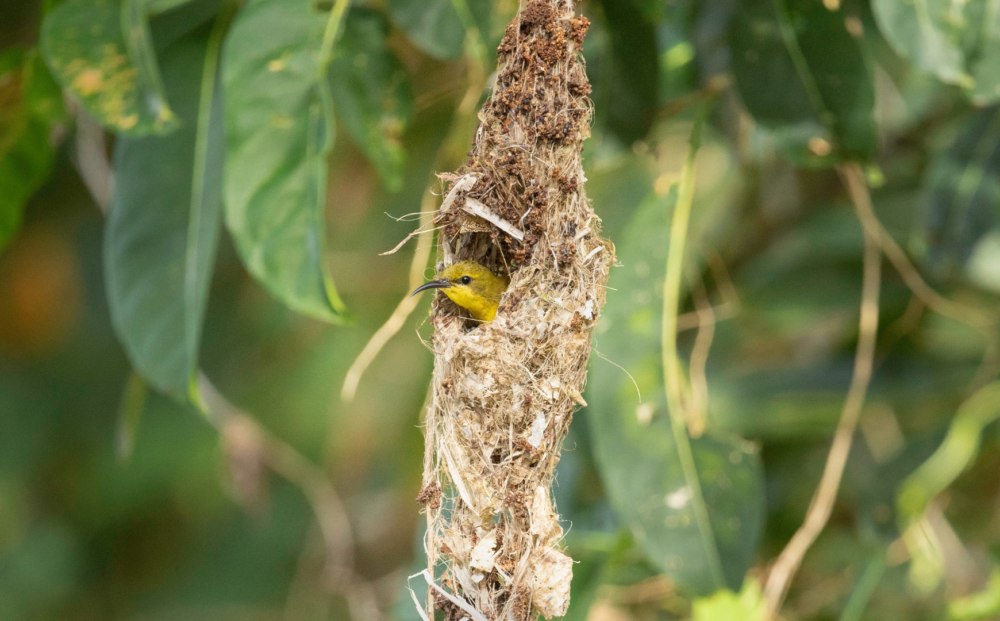
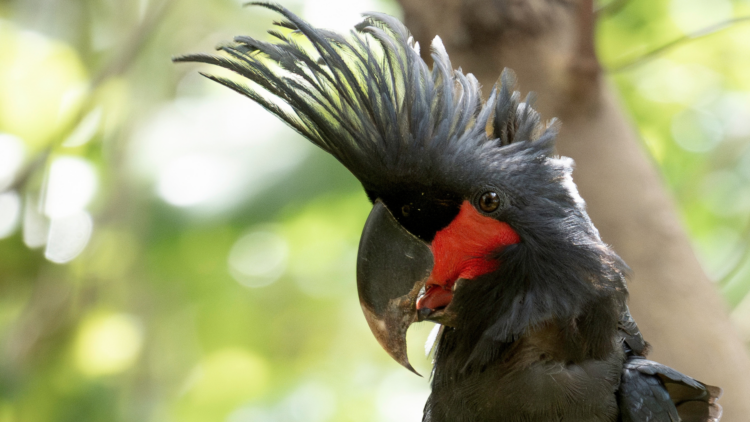
Flying in first means the rainforest birds come before any long drive. Three full days in Iron Range go after the species that, in Australia, live here and almost nowhere else: palm cockatoo, eclectus parrot, red-cheeked parrot, the magnificent riflebird and trumpet manucode (both birds-of-paradise), yellow-billed kingfisher, frill-necked monarch, black-eared catbird and fawn-breasted bowerbird, their ranges reaching across the Torres Strait to New Guinea. Night walks led by wildlife biologist Dr Martin Cohen search for Papuan and marbled frogmouths, cuscus and green tree python. Heading south, the tour picks up Cape York's two endemic birds in turn, the white-streaked honeyeater in the heath at Tozer's Gap and the golden-shouldered parrot on Artemis Station, where the Shephard family has worked with conservation partners to protect one of its last breeding populations.
The Kuuku Ya'u people are the Traditional Owners of Kutini-Payamu: kutini is their word for the southern cassowary and payamu the rainbow serpent. The park holds the largest remaining area of lowland rainforest in Australia, a refuge for birds shared with New Guinea, and the Australian range of the eclectus parrot is confined to the Iron and McIlwraith ranges between the Pascoe and Rocky rivers. Iron Range is also where Australian National University researchers recorded male palm cockatoos drumming on hollow limbs with sticks and seedpods they had shaped, behaviour documented only in the Cape York population. The golden-shouldered parrot is listed as endangered, and Australian Geographic reported in 2024 that as few as 50 to 70 remained at Artemis.
The tour also runs in the opposite direction: Cape York Birdwatching: Iron Range to Cairns
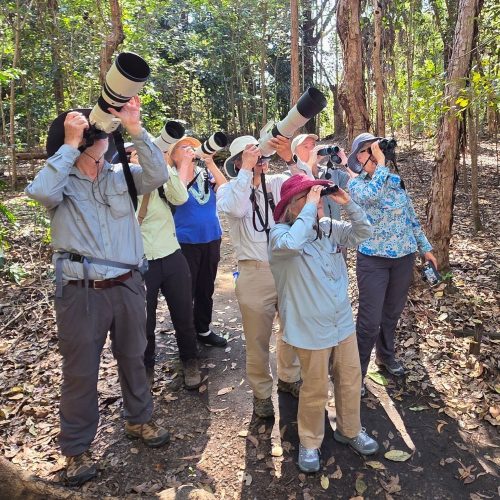
This tour is for birdwatchers who want the Cape York specials without a long drive before the best of the birding, and who are happy to finish with a road trip. You do not need to be an expert, as your guide will help you find and identify birds, but the days are built around birding rather than sightseeing, with early starts and time spent waiting and watching
Day 1
Cairns (Gimuy) to Lockhart River – straight into the rainforest
Fly from Cairns to Lockhart River, about an hour and a half up the coast of the peninsula, where your guide meets the flight. It is a short drive to The Greenhoose, on the edge of Kutini-Payamu (Iron Range) National Park, and after lunch the first birding starts in the lodge's tropical gardens and private rainforest trails. Birds that take a week of driving to reach on other trips are often around the lodge on the first afternoon.
Overnight: The Greenhoose.
Meals: L/D.
Day 2
Kutini-Payamu (Iron Range) – palm cockatoos and rainforest specials
Day 3
Kutini-Payamu (Iron Range) – creek forests and night spotting
Day 4
Portland Roads and Chilli Beach
Day 5
Over Tozer's Gap to Musgrave
Day 6
Rinyirru (Lakefield) National Park and Artemis Station
Day 7
Musgrave to Cairns

Which birds are endemic to Cape York?
Will we see a palm cockatoo?
How is this different from the 'Cape York Birdwatching: Iron Range to Cairns' tour?
Should I book a pre-tour night in Cairns?
How do I get home at the end of the tour?
What is the level of physical activity?
Is this tour suitable for beginner birders?
Can I book a twin spot (half-twin share) if I am travelling on my own?
Can I book a private departure?


Tour Collection: Photography

Tour Collection: Photography

Tour Collection: Nature & Wildlife
Tour Collection: Bird Watching

Tour Collection: Bird Watching

Tour Collection: Citizen Scientists
Tour Collection: Nature & Wildlife

Tour Collection: Indigenous & Culture

Tour Collection: Exclusive Expeditions

Tour Collection: Exclusive Expeditions

Tour Collection: Active Adventure
Tour Collection: Photography

Tour Collection: Nature & Wildlife
Tour Collection: Bird Watching

Tour Collection: Nature & Wildlife

Tour Collection: Women’s Only
Tour Collection: Photography
Tour Collection: Photography
Tour Collection: Photography
Tour Collection: Photography
Tour Collection: Nature & Wildlife
Tour Collection: Bird Watching
Tour Collection: Bird Watching
Tour Collection: Citizen Scientists

Tour Collection: Nature & Wildlife

Tour Collection: Nature & Wildlife

Tour Collection: Conservation & Citizen Science

Tour Collection: Nature & Wildlife

Tour Collection: Nature & Wildlife
Tour Collection: Photography
Tour Collection: Photography

Tour Collection: Nature & Wildlife

Tour Collection: Nature & Wildlife

Tour Collection: Photography

Tour Collection: Bird Watching
Tour Collection: Photography

Tour Collection: Bird Watching

Tour Collection: Nature & Wildlife
Tour Collection: Photography
Tour Collection: Photography
Tour Collection: Nature & Wildlife
Tour Collection: Bird Watching
Tour Collection: Bird Watching
Tour Collection: Bird Watching
Tour Collection: Citizen Scientists

Tour Collection: History & Fossils

Tour Collection: Bird Watching

Tour Collection: History & Fossils
Tour Collection: Photography

Tour Collection: Photography

Tour Collection: Nature & Wildlife

Tour Collection: Bird Watching
Tour Collection: Photography
Tour Collection: Nature & Wildlife